
There is a specific point in most high-level careers where the illusion of control is not gradually weakened, but abruptly removed. It rarely happens through a slow drift of underperformance. It happens in a moment—clean, final, and indifferent to your preparation.
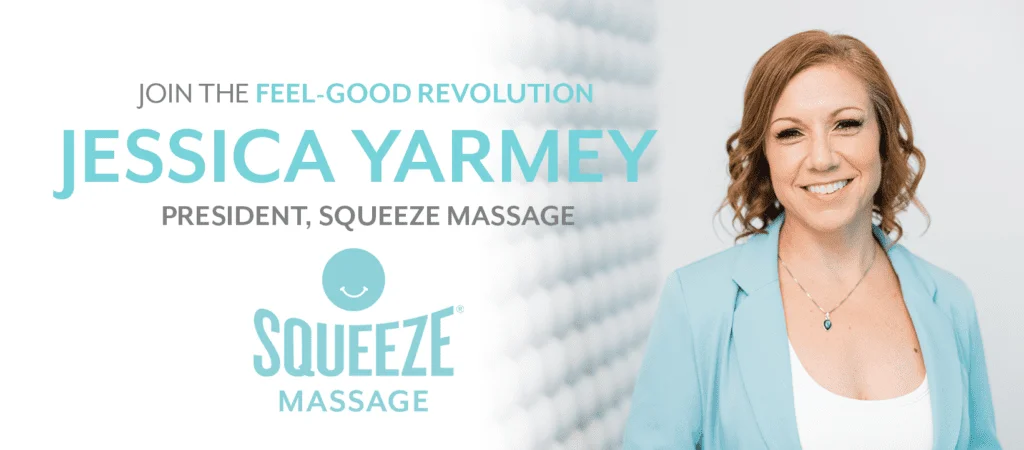
For Jessica Yarmey, that moment arrived on a Friday afternoon.
The scene was a cliché of corporate trauma: a box of belongings in the car, a silent commute home, and the sudden, jarring realization that the role she considered her “dream job”—Director of Marketing at Gold’s Gym—was over. But for Yarmey, the stakes weren’t just professional. She was recently divorced and the mother of a four-year-old. When the “light switch” of her career flipped off, the darkness didn’t just stay in the office; it followed her into her kitchen and her bank account.
The Speed of Collapse
We are taught that confidence is built over decades. We aren’t told it can evaporate in hours.
“It felt like a fast downward spiral,” Yarmey recalls. “The inside voices go negative so fast. It went dark; it went gray.” The questions that had no reason to exist the day before became dominant: Was the success a fluke? Do I even belong in this game? Can I still be a good mom?
When identity is closely tied to a professional trajectory, a layoff isn’t just a loss of income—it is a loss of internal signal. The mind, abhorring a vacuum, fills the space with doubt. In these moments, the most common instinct is expansion. We reach outward, apply broadly, and lower our thresholds just to feel the friction of “doing something.”
Yarmey’s recovery began when she refused that instinct.
The Venn Diagram of Conviction
Instead of casting a wide net, Yarmey built a filter. She looked back at her career—which had already seen two previous layoffs—and looked for the “why.”
She identified two circles that defined her: Marketing as a capability and Fitness as a personal conviction. She realized that her best work happened only where those circles overlapped. In a moment of extreme vulnerability, she made a counterintuitive choice: she stopped applying for “random things.”
“I had the filter that whatever I take next has to be a step up, and it has to be in that exact Venn diagram,” she says.
Constraint, especially under pressure, feels like exposure. It reduces your options at the exact moment options appear necessary. But constraint also restores coherence. By narrowing her field, she stopped being a “marketing applicant” and became a “fitness industry specialist.”
Vulnerability as an Operational Tool
Clarity of direction, however, doesn’t immediately cure a wounded ego. To stabilize her internal environment, Yarmey introduced an external counterbalance.
Recognizing that her own “internal voices” had become unreliable narrators, she reached out to her network with an unusual level of candor. She didn’t just ask for leads; she asked for a mirror. “I had to proactively seek out positive perspectives,” she explains. “I would connect with someone and say: ‘Hey, I’m on a low. Can you remind me that I’m good at what I do?’“

Jessica Yarmey
As President of Squeeze Massage, Jessica Yarmey is focused on accelerating national expansion and strengthening the franchise network. With 12 locations nationwide, Squeeze delivers a “way better” massage experience through thoughtfully designed spaces, an intuitive app, and a guest-centered approach.

This reframes vulnerability from a weakness into an operational tool. By asking for validation, she built a “sanity framework” that allowed her to remain relentless in her pursuit.
Direction vs. Noise
That pursuit was anything but passive. In an era of AI-generated applications and 2,000-person LinkedIn pools, Yarmey understood that “need” is a commodity, but “direction” is a signal.
She identified the leaders she wanted to work for and became—in her own words—relentless. When one executive didn’t respond, she messaged him again. And again. She wasn’t begging for a job; she was asserting a specialized value.
“Be aggressive. Be annoying,” she advises. “You have to have a level of complete passion around that being your exact correct next step to stand out from the hundreds of applicants sitting in the HR queue.”
The Compound Effect of Alignment
A decade later, the “downward spiral” of that Friday afternoon is a distant memory, but the structural changes it forced remain.
Today, Yarmey is the CEO of Squeeze Massage, a national franchise. The opportunity didn’t come from a job board; it came from “being in the room.” While consulting on a different project, she identified a gap, raised her hand, and positioned herself to lead the business. The response from ownership was immediate: “No need to interview. Let’s do it.”
What appears in retrospect as “things falling into place” is actually the accumulated effect of sustained alignment. When you operate within your specific intersection of passion and skill—your Ikigai—opportunities begin to flow toward you rather than away.
Improving the Plane While Flying It
The most significant shift in Yarmey’s leadership style today is the move from a “control freak” mentality to a “growth mindset.”
As she scales Squeeze from 12 locations to a projected 200, she embraces an egoless approach. “I don’t know, but I’m going to ask good questions and figure it out,” she says. This creates a culture where it is safe to be “new” to a modality, as long as you are committed to the direction.
The breakdown of control she experienced years ago wasn’t just a disruption; it was a diagnostic. It revealed that true stability isn’t found in a job title or a brand name. It is found in the ability to realign independently of the environment.
The result isn’t just momentum. It is a career built on the only thing you truly can control: your own focus.
Author

Nick Vaidya, MS, MBA, PhD (c)
Website:
www.tptcoach.com
Profile:
linkedin.com/in/nickvaidya
Social:
youtube.com/channel/Diagnosis First
Nick Vaidya is a Wiley best-selling author and a regular columnist for Forbes India and The CEO Magazine. His career spans academia and industry—from serving as a university faculty member in psychometrics to holding CEO/CXO roles across startups, SMBs, and a unicorn. He has led the largest Center of Competence at Dell Technologies and worked closely with the Chairman’s Strategy Team. Today, Nick partners with SME CEOs to scale their businesses using proprietary frameworks and diagnostic tools designed to drive cultural transformation and accelerate organizational growth.